Tag: theatre

  • Review: The Glass Menagerie by Tennessee Williams (Bag&Baggage Productions, Hillsboro, OR)

    Review: The Glass Menagerie by Tennessee Williams (Bag&Baggage Productions, Hillsboro, OR)

    In Spain, there was revolution. Here, there was shouting and illusion.
    -Tom Wingfield

    You will not find a better production of The Glass Menagerie than the one I saw on Sunday at Bag&Baggage in Hillsboro, just outside of Portland. I’m not exaggerating: it was a truly touching rendition of the classic American play that struck close to home in 2025.

    Bag&Baggage Productions consistently puts out excellent, professional theatre productions. You can tell the company truly cares about their craft and building community through storytelling. They are also home to the Native Theatre Project, which last year produced the original work Diné Nishłį (I am a Sacred Being) and this year will produce Antíkoni by Beth Piatote, a reimagining of Sophocles’ Antigone. This season, after leadership changes, the company is working toward a theme of “Roots & Renewals,” aiming “to recognize the roots and history of the company… to carry that spirit forward as we strengthen existing bonds, renew old connections and grow new relationships.”

    When I walked in, I was already impressed with the simplistic setup: a black box transformed into a thrust stage, with a brick outline lining the ceiling, separating the living room and kitchen. Kyra Sanford’s set felt intimate and appropriate for the story about to be told. Props kept with this simple design and were also so intricate: Karen Wingard’s impressive fading newspaper full of Latin gibberish felt right at home with this memory play, as well as the Wingfield father being blurred out in the picture above Laura’s menagerie.
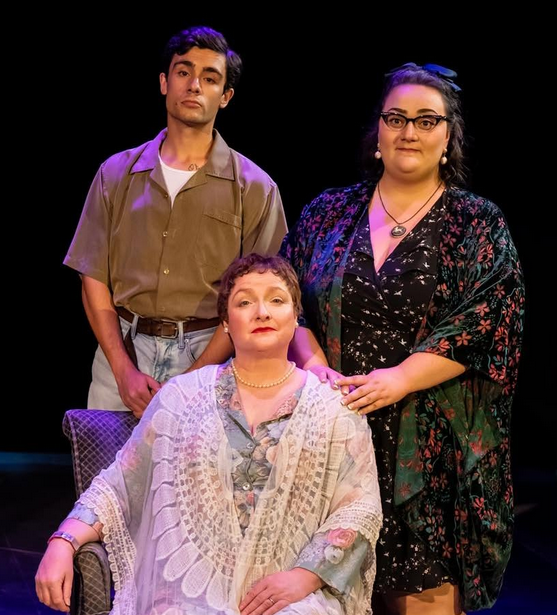
    (back) Samuel Scott Campbell as Tom Wingfield, Taya Dixon as Laura. (front) Kymberli Colbourne as Amanda. Photo by Casey Campbell Photography

    Right away, we were swept into the Wingfield family, and what a family was created in this production. Director Nik Whitcomb excellently created an atmosphere of a family who both loves and despises each other, who wants the best and also can’t stand to be around each other. The Wingfields here truly breathed and felt like a real family.

    Taya Dixon gave Laura an agency that is rarely, if ever, seen in Menagerie productions. She was not just a helpless innocent but a moving force all on her own, acting as both mediator between her brother and mother, as well as emotional caretaker to Amanda. Dixon showed us a multi-faceted character who wants her innocence but seems to know it’s always out of reach. She also depicted chronic pain for Laura, which I felt despite Laura’s disability has rarely been properly showed onstage.
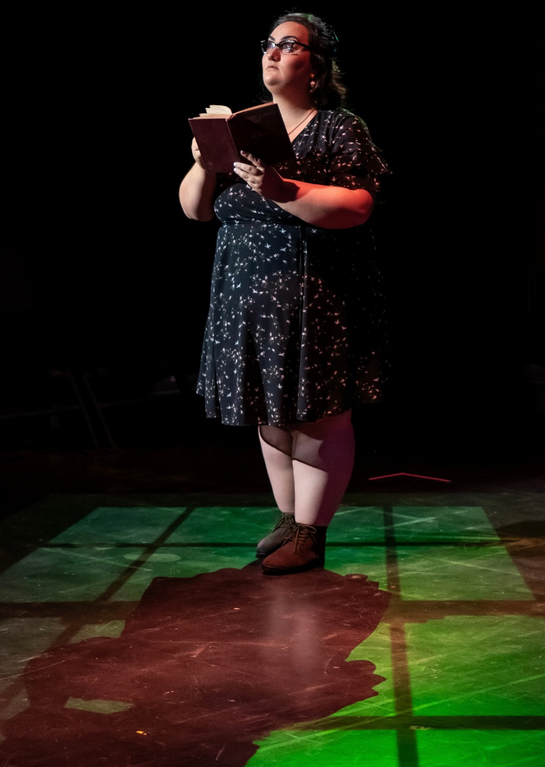
    Taya Dixon as Laura Wingfield. Photo by Casey Campbell Photography

    Samuel Scott Campbell as Tom was a natural fit: Campbell knew when to switch in his banter with other characters–and within his monologues–between the humor of the situation and the serious nature of the discussion. He showed us a Tom who doesn’t hate Amanda, a Tom who is hurt by the things Amanda says and does to both him and his sister, a Tom who wants escape but also fears it. I loved the subtle choices of Tom being queer-coded; this added another layer of richness to Campbell’s performance. Also, Campbell and Dixon’s comedic timing in Act I was spot-on; they have a natural sibling dynamic every time they’re onstage.

    Campbell as Tom, Dixon as Laura.
    Photo by Casey Campbell Photography

    Kymberli Colbourne as Amanda… My goodness. She was breathtaking and swept the audience up in her rants and tirades while at the same time making us feel sorry for her. Colbourne’s master of manipulative tactics never felt forced, which was what made her so convincing. One of my favorite scenes of the play was Amanda and Tom on the fire escape, bonding for a moment before they once again break. This was the most honest and vulnerable Amanda; major props to Colbourne.

    Why can’t you and your brother be normal people?!
    -Amanda Wingfield
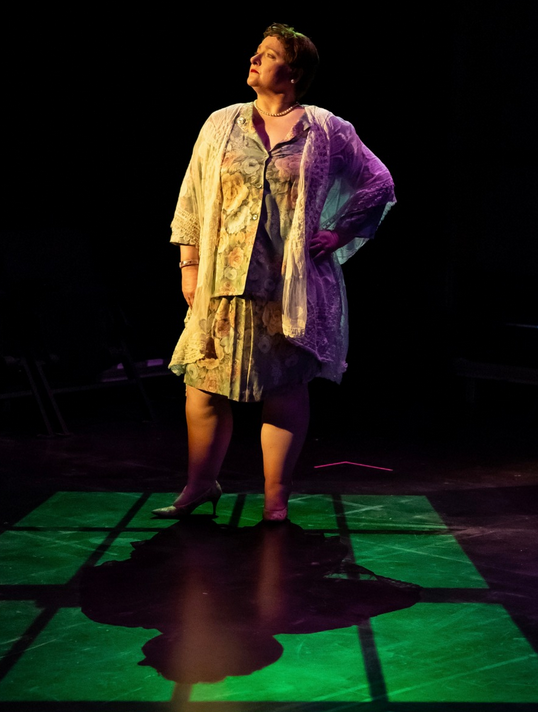
    Colbourne as Amanda. Photo by Casey Campbell Photography

    Act II gave us even more intricate details about the Wingfields prior to the gentleman caller’s arrival. There was a brilliant costuming detail with Amanda’s old dress, where it won’t zip up all the way, and Laura ends up covering her mother’s back with her own shawl. This subtlety showed us everything we need to know about Amanda being stuck in the past, Laura acting once again as caretaker to her mother, and the passage of time from Amanda’s glory days.

    So, I loved Jim. Nick Medina shone as the iconic gentleman caller, making him feel relatable and real as a guest in a friend’s home. Campbell and Medina’s banter is cheeky, a bit flirty, and a great deal of fun: you can tell the care put into their relationship-building as Tom and Jim. Medina’s charming line delivery to the Wingfields gave us a stark contrast to later in the scene after he kisses Laura, where we see the cracks begin to form in his exterior. Dixon and Medina give a level of playfulness between Laura and Jim, a true chemistry that was a nice contrast to Laura in Act I. I will never forget Dixon’s delivery of Laura’s line “A souvenir” after the glass unicorn’s horn broke off and she gave it to Jim. It will haunt me because of its honest delivery.
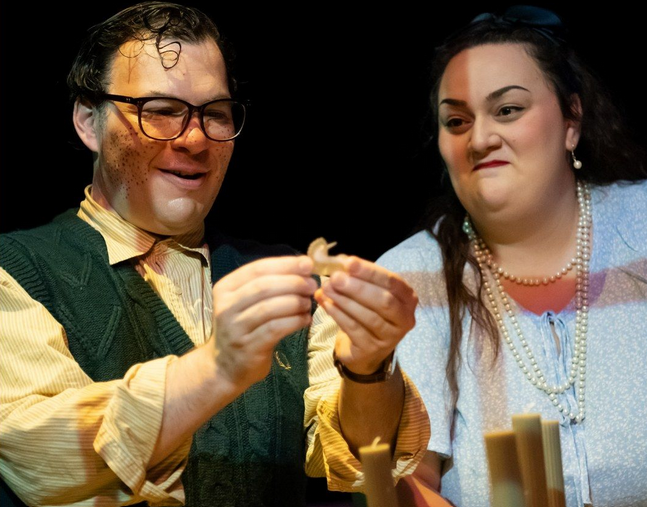
    Nick Medina as Jim. Dixon as Laura. Photo by Casey Campbell Photography

    Lights and sound worked in tandem to replicate the environment of a hazy memory. Ash’s sound design was particularly impressive, given that many of the background songs were composed by her in full: the songs truly sounded straight out of the 1950s, where the play was reset.

    Between the deliberate direction, intricate design choices, and the actors’ commitment, Bag&Baggage’s 2025 production of The Glass Menagerie was one that playwright Tennessee Williams would be proud of if he were here to see it. I think he too would feel it rings as true to today as to when it was first produced in 1944, bringing life to coming to terms with change and how perspective changes over time.
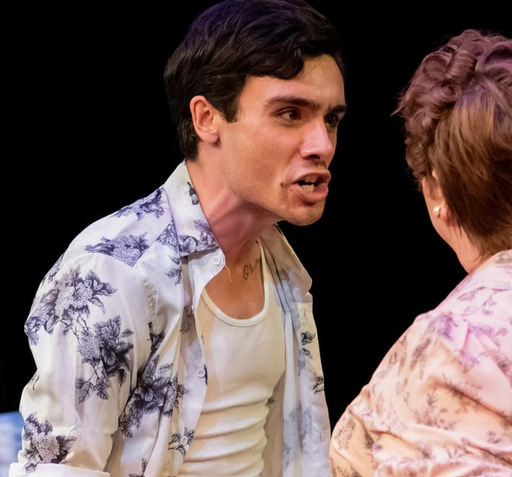
    Campbell as Tom yelling at Colbourne as Amanda.
    Photo by Casey Campbell Photography

    Thank you Bag&Baggage for such an excellent production! I look forward to seeing many more. Everyone in the greater Portland area should have this theatre on their radar and support them through their continued intentional storytelling in the Pacific Northwest. Arts organizations like Bag&Baggage need our support now more than ever.


    Want me to review a show in Oregon or the Pacific Northwest? Email somescriptslitmag@gmail.com with a press comp invitation, and I will happily come see your show and write a review!
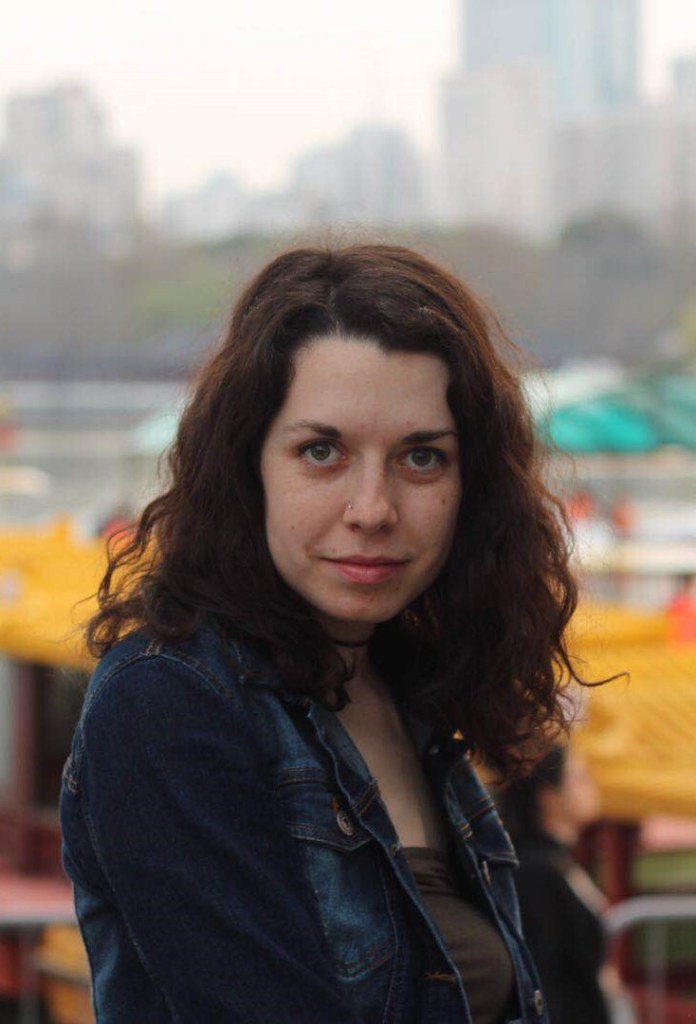

    Alyssa Cokinis is a writer and theatre artist from Iowa, currently living in the Pacific Northwest. She is also the founder and editor of some scripts.


    Like what you read? Help keep some scripts up and running with a small donation!
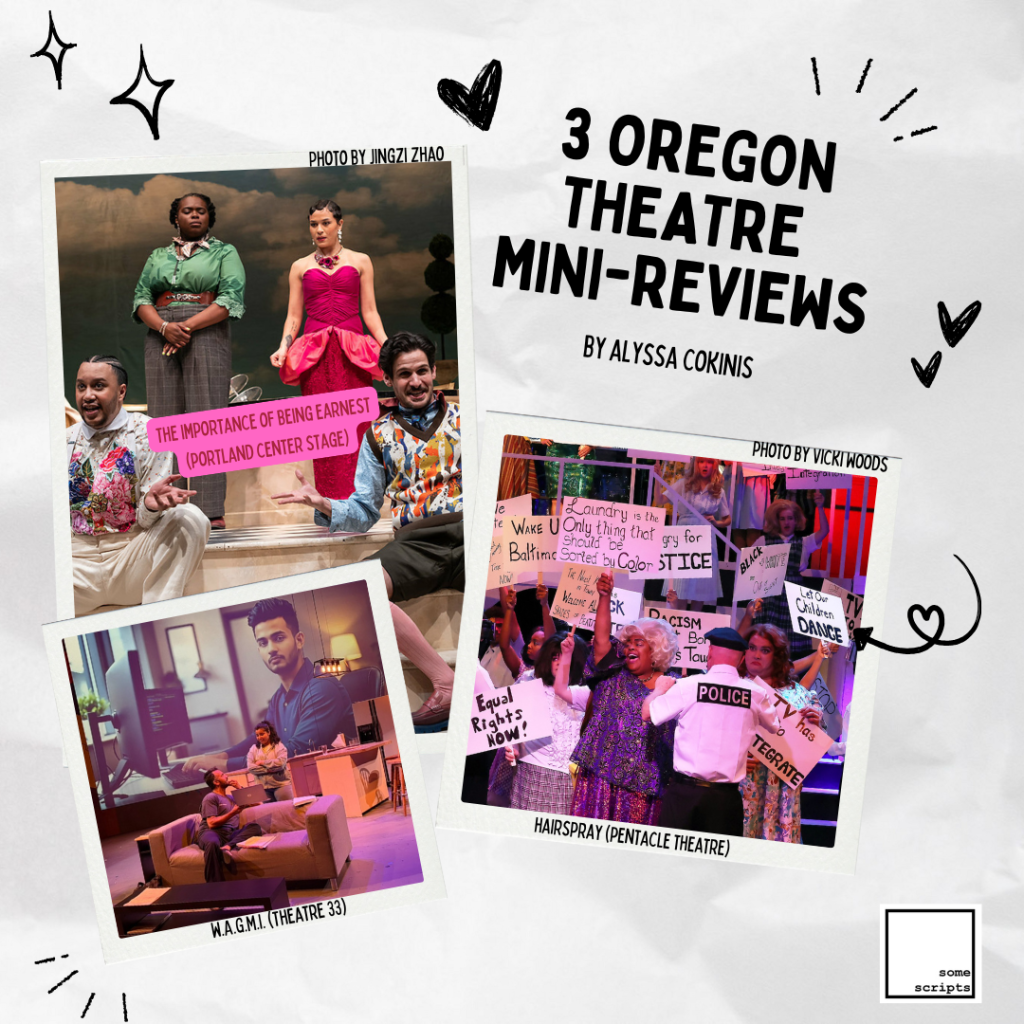
  • 3 Oregon Theatre Mini-Reviews: Summer 2025

    3 Oregon Theatre Mini-Reviews: Summer 2025


    Summer 2025 was a summer of theatre for me! From Portland to Salem, there was consistently great work being done to show a thriving theatre scene looking toward the future while paying homage to the past.

    Here are three shows I saw that pushed boundaries and were entertaining–for better or worse.

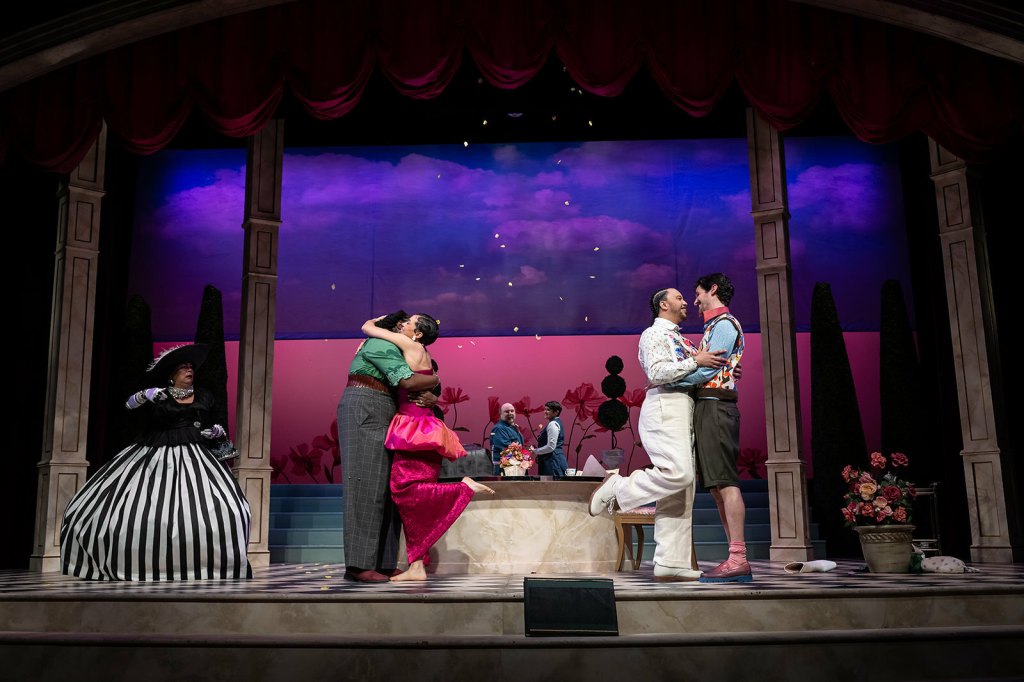
    The Importance of Being Earnest by Oscar Wilde (Portland Center Stage, Portland)

    In June a friend and I made our way up to Portland to see The Importance of Being Earnest at Portland Center Stage, directed by Josiah Davis. With a love for Oscar Wilde, we expected a fun experience reminiscent of previous Earnest productions. What we got was so fun and more overtly gay! Hooray!

    Photo by Jingzi Zhao

    This production was derived from a new adaptation of Oscar Wilde’s original play by Kamilah Bush, the literary manager at PCS. Without sacrificing the commentary on Victorian-era ideals, Bush pushed the show’s setting up to the 1920s and from England to Washington, DC. While it wasn’t always clear why there was a need to replant the show in a different time and setting, Bush’s adaptation is still overall a resounding success in its commentary on queer identity, love, and acceptance.

    This adaptation played with the idea of Jack and Algernon plus Gwendolen and Cecily eventually coming to the idea to end up in lavender marriages. This clever twist gave us an all-new scene between Cecily and Gwendolen and played up the theatrics between the hetero pairings prior to the stand-off with Lady Bracknell. Each actor committed entirely to their role and brought about a perfect show for Pride Month.


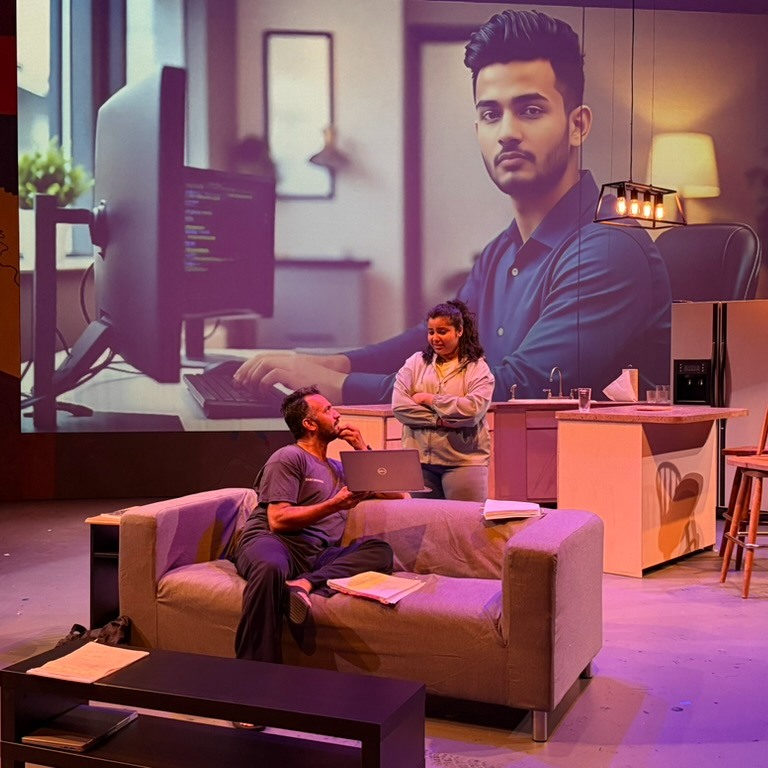
    We’re All Gonna Make It (W.A.G.M.I.) by AR Nicholas (Theatre 33, Salem)

    Theatre 33 is a staple summer theatre festival in Salem, Oregon (the capital, about a one hour drive south of Portland). The festival format of Theatre 33 lends itself to workshop productions of new plays, as well as staged readings of others, chosen from an open submission process each year. According to the theatre’s mission, it is a “professional new play development company in residence at Willamette University… dedicated to advancing Oregon and NW artists, playwrights, history, and culture.” While I wasn’t able to make it to most of the other shows in their festival unfortunately, I did get to see W.A.G.M.I., written by AR Nicholas and directed by Elizabeth Rothan, which gave a lot of food for thought.

    Nicholas’ play is a play in the near future (or now) about a couple who are navigating the different ways surveillance infects their lives. The husband Nick is under house arrest, being investigated for fraud. The wife Jocelyn is slowly losing her grip on reality the longer she finds herself possibly being stalked by a figure in a trench coat.

    The workshop of this play showed the potential it has. Actors Devika Danish Dhamija and Parth Ruparel showed a commitment to portraying their relationship as a married couple as organically as possible. Ruparel particularly excelled, coming in and out of each scene with ease, given circumstances clearly embodied in how he portrayed Nick. The actors did a fantastic job, and the projection design by Tim Cowart was particularly effective, embedding the audience in this living room play surveillance state nightmare.

    The writing lacks somewhat in cohesion, and that shows in the overall directorial vision of the play. Despite the play going through the development process with Theatre 33, the audience is left with more questions than answers–and not necessarily in the satisfying way–at the end of the play. Dhamija and Ruparel do their best with what they’re given. The play could stand as a two-hander without the inclusion of the third trenchcoat-wearing stalker also, seeing as we get plenty of that character through projection and not enough of them onstage to justify their physical presence.

    Overall, Theatre 33 is doing important work for new plays, though it would be cool to see less PDX-based artists involved and more inclusion of theatre artists local to Salem and its surrounding areas. Otherwise, the festival might as well happen in Portland for the sake of the actors commuting.


    Hairspray (Pentacle Theatre, Salem)

    While this was my first time seeing a show at the Salem community theatre, it was certainly the one I was most interested in seeing. Pentacle Theatre, a staple of Salem since 1954, is the community theatre of the city. Despite being the capital city of Oregon, Salem does lack in a truly robust arts scene, though there is a lot of movement to change that. Pentacle Theatre works to fill that gap, and their production of Hairspray was not one to miss (so sorry if you did!).

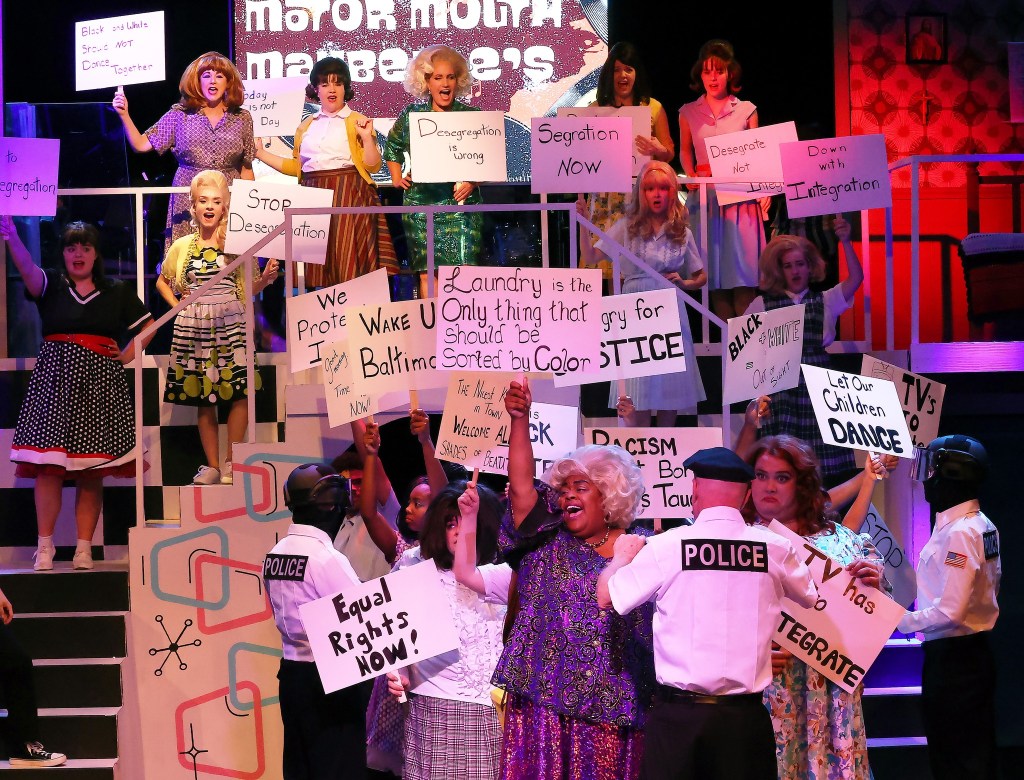
    Hairspray (by Mark O’Donnel and Thomas Meehan [book], Scott Wittman [lyrics], and Marc Shaiman [music & lyrics]) is a fun musical with campy songs and dances, and its significance in blatantly discussing civil rights rings true even in 2025. As we watch the erosion of people’s rights in the United States under a right wing, openly fascist government, productions like Hairspray that show a community coming together to fight for one another, to fight for inclusion, and to fight for love in spite of racism and discrimination.

    Photo by Vicki Woods

    Jessica Peterson as Maybelle Motormouth received a rightfully deserved standing ovation for her honest and simple rendition of “I Know Where I’ve Been”; Paige Caballero as Tracy Turnblad, Mason Fuller as Seaweed, Michael Louladkis as Edna Turnblad, Olivia McCoy as Little Inez, Trevor J. Olson as Link Larkin, Natalie Pate Gwin as Penny Pingleton, Peterson as Maybelle, and the entire ensemble round out to perhaps the most professional-level production seen in Salem for the last few years. It’d be cool for Pentacle to pay their talented casts even a small stipend, especially with a powerhouse cast like Hairspray.

    Major props need to be given to director Robert Salberg, assistant director Deborah Johansen, music/vocal director Kent Wilson, and all of the designers for a very sleek, fun production that will tug on your heartstrings. Hairspray is the kind of theatrical production Salem needs more of.


    Want me to review a show in Oregon or the Pacific Northwest? Email somescriptslitmag@gmail.com with a press comp invitation, and I will happily come see your show and write a review!


    Alyssa Cokinis is a writer and theatre artist from Iowa, currently living in the Pacific Northwest. She is also the founder and editor of some scripts.


    Like what you read? Help keep some scripts up and running with a small donation!
  • Review: Cosmos / Awalem ‘عوالم’ by Ashtar Muallem (La Main de l’Homme and ASHTAR Theatre, toured to Boom Arts, PDX)

    Review: Cosmos / Awalem ‘عوالم’ by Ashtar Muallem (La Main de l’Homme and ASHTAR Theatre, toured to Boom Arts, PDX)

    written by Alyssa Cokinis

    Better late than never to talk about this beautiful show I saw in spring 2025!

    On Sunday, March 2nd, I drove to A-WOL Dance Collective in Portland to see the U.S. premiere touring to Boom Arts for the weekend of Cosmos / Awalem ‘عوالم’.

    Awalem ‘عوالم’ is a solo show with some interactive elements conceived by the performer, Ashtar Muallem, and Clément Dazin and translated from French to Arabic with development done by Ashtar Muallem and Emile Saba of ASHTAR Theatre in Ramallah, Palestine. The version I saw was the Arabic one with English surtitles, though Muallem often spoke in English interludes to us in the audience that matched the surtitles.

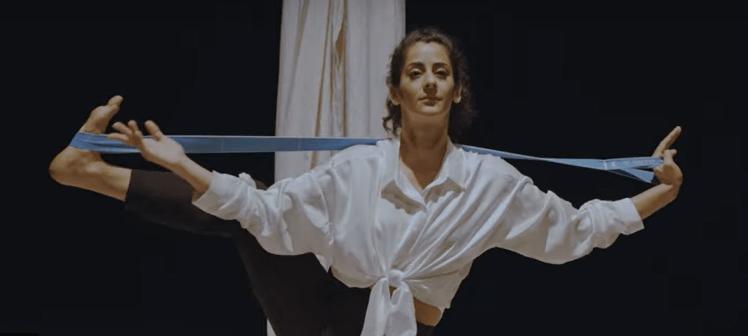
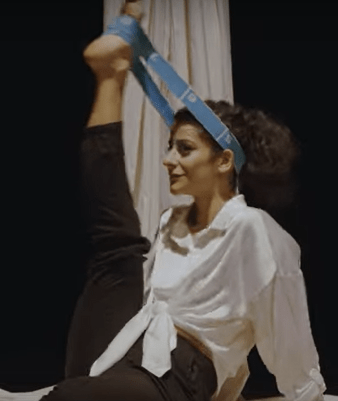
    Ashtar Muallem (thin Palestinian woman) in a white long-sleeve collar shirt and black pants, using a blue exercise band to stretch her right leg with her left hand.

    Boom Arts is a new favorite Portland theatre of mine, after I saw Jogging by Hanane Hajj Ali in October 2023 (another fantastic solo show by an Arab theatre artist). They consistently bring in fantastic work that enriches the Portland theatre community.

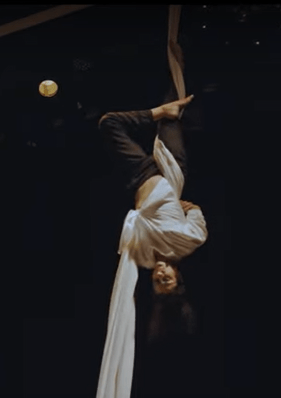
    What made Awalem ‘عوالم’ so enticing from the beginning was the simplicity of the stage. Walking in, I saw the silks that Muallem eventually climbed and performed on. She sat in the middle of the silks, taking the audience in and preparing for the one-hour show ahead.

    Ashtar Muallem (thin Palestinian woman) in a white long-sleeve collar shirt and black pants, using a blue exercise band around her head with her right leg up vertical to stretch.

    When the show began, Muallem began her physical exercises to prep for her silk dance, which included using an exercise band. She spoke of her experiences growing up in Palestine, her exercise work, and her relationship to her grandmother and religion. While we witnessed her physical flexibility, we also heard about how she navigated life as a Palestinian in Palestine under Israeli occupation and her move to France. Each precise movement was matched perfectly with the energy of what she spoke about.

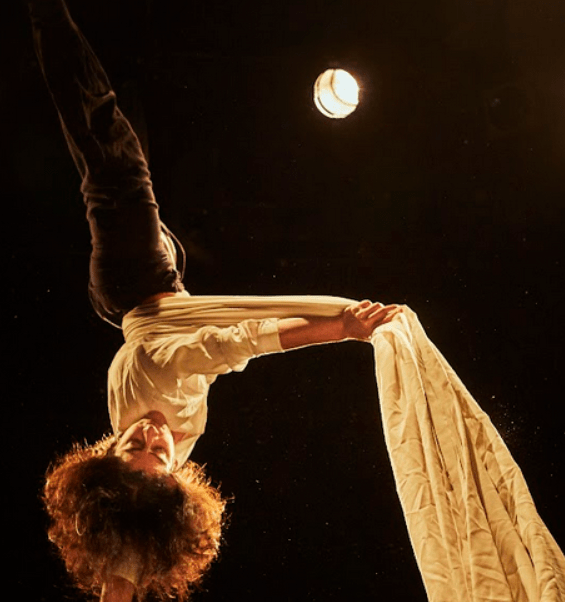
    Ashtar Muallem (thin Palestinian woman) in a white long-sleeve collar shirt and black pants, upside down on white silks.

    While there were serious topics of leaving family and homeland behind, there was also a lot of humor. Muallem fully leaned in to the dichotomies of her life by weaving together comedy with her inclination to tarot readings, asking an audience member up onstage to cut an onion while she danced on silks, and smoking a cigarette at the top of the silks as though on a balcony in her Paris apartment. All of these intricate acting choices lend itself to a refreshing and interconnected performance.

    While we as the audience could not relate to every personal experience, Muallem balanced sharing her story while bringing the audience together to witness and participate in it.

    Ashtar Muallem (thin Palestinian woman) in a white long-sleeve collar shirt and black pants, upside down on white silks.

    Overall, Cosmos / Awalem ‘عوالم’ was a fantastic one-person show that brought a full house together to witness new Palestinian theatre-making and stories for the stage. It is a great reminder to us that each person’s story holds a multitude, in all its light and dark moments, and is worth telling.

    Support independent theatre like Boom Arts in the wake of U.S. federal budget cuts to arts organizations. There are both sponsorship opportunities and tax-deductible donations you can give. The U.S. deserves a vital, thriving arts scene that brings international voices here, like what Boom Arts provides for Portland.


    Alyssa Cokinis is a writer and theatre artist from Iowa, currently living in the Pacific Northwest. She is also the founder and editor of some scripts. alyssacokinis.com

    Like what you read? Help keep some scripts up and running with a small donation!
  • Review: Beginnings and Endings by Sarah Lynn Brown at Bag&Baggage Productions (Portland, OR)

    Review: Beginnings and Endings by Sarah Lynn Brown at Bag&Baggage Productions (Portland, OR)

    written by Alyssa Cokinis

    After delaying opening night due to ice and snow, Beginnings and Endings by Sarah Lynn Brown, directed by Melody Erfani, opened at Bag&Baggage Productions in Hillsboro (just outside of Portland) on February 16, 2025. Bag&Baggage describes the show as “continuing its tough love affair with Shakespeare,” though it more than continues–the show is overall a wonderful success and tribute to the Bard.

    Beginnings and Endings is actually two one-act plays by playwright Sarah Lynn Brown that have little in common with each other. However, Erfani’s smart framing of the shows as two museum exhibits, reflected in everything from Kyra Sanford‘s scenic design down to the actors serving as museum tour guides at pre-show, sets the audience up well for what to expect in the coming two hours.

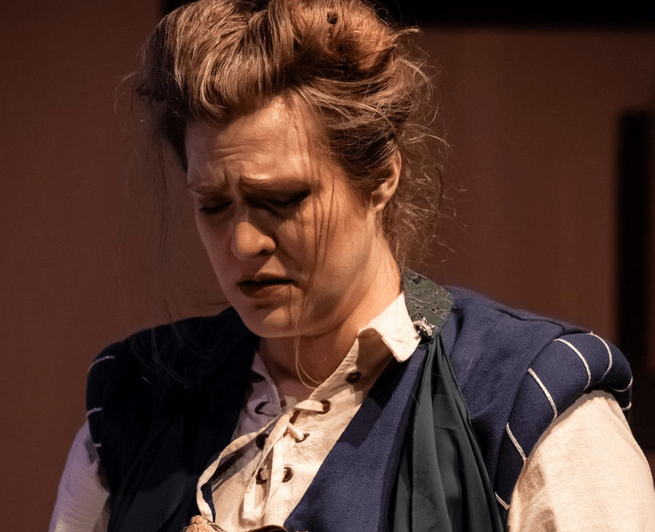
    Actor Signe Larsen in deep, distraught contemplation. Photo by Casey Campbell Photography.

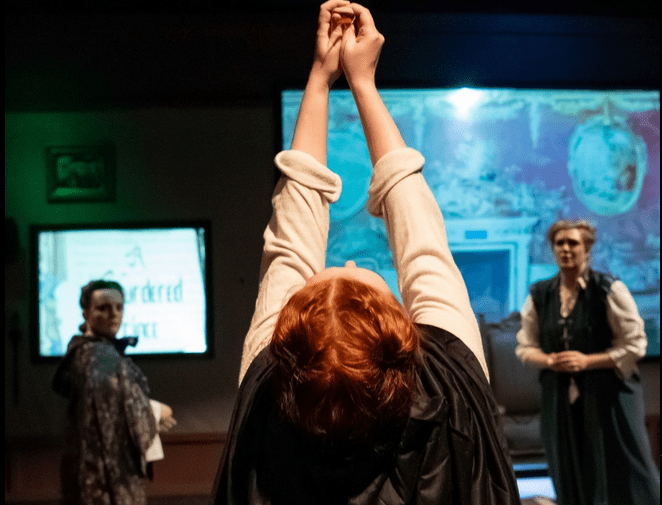
    The first act is a rousing adaptation of Richard III aptly titled Richard 3³, which sees all three actors tackle the iconic role and other lead and supporting roles from the original play. This conceit, along with Erfani’s direction, lead to an eerie and exciting switching of the role. In this way, we see a more multi-faceted Richard than if a single actor was playing him: Signe Larsen gives a more gruff and intimidating performance of Richard, Jacquelle Davis leaves us hanging on the edge of our seats, and Mindy Mawhirter’s rendition shows us Richard’s full power of manipulation. When the three are onstage together, speaking and moving as one Richard, Erfani’s direction shines and draws us in completely to Richard’s inner world.

    Actor Mindy Mawhirter (C), back to viewer and arms raised, with actors Jacquelle Davis (L) and Signe Larsen (R) flanking and looking on. Photo by Casey Campbell photography.

    As the actors break in and out of scene, Abby Weinman’s simple costume design paired with Karen Wingard’s props design and Sanford’s scenic design assist the audience along in character changes… and the projected title cards help a lot too, telling us which characters are in scene with one another and where they are. I would be remiss if I didn’t mention how much I loved the eerie sound design of Ash in this show: they perfectly captured the dark political tone of the show with bass reverberations and haunting musical echoes. Overall, Richard 3³ is an exciting, tightly-packed adaptation of the original that stays true to the story’s original intent while subverting classical Shakespearean production expectations.

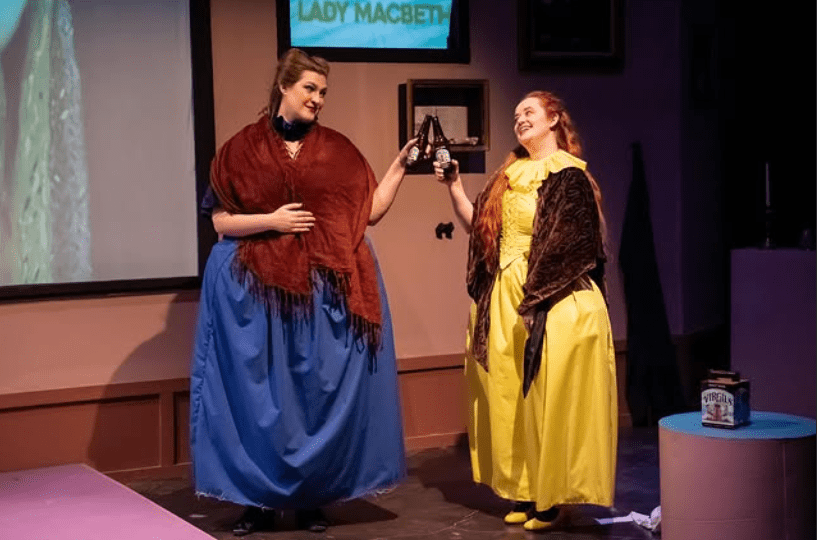
    Actors Signe Larsen and Mindy Mawhirter clanking root beers onstage in Femme Endings. Photo by Casey Campbell Photography.

    The second act, Femme Endings, deviates away from storytelling in iambic pentameter (though we certainly get a rhythm and grammar lesson in the show) as the three actors take on a large part of diving into the psyches of Shakespeare’s tragic ladies (and also Joan of Arc and Twelfth Night‘s Olivia–interesting choices), as well as “the Dark Lady,” one of Shakespeare’s sonnet muses. This interactive show tears down the fourth wall as actors directly ask the audience for feedback with a coin toss, invite audience members onstage for thumb wars, and even traverse into our ranks to look for mementos in our pockets. These moments keep it fun and lively in between feminist deconstruction of some of the Bard’s famous female characters like Ophelia and Gertrude from Hamlet, Juliet from Romeo and Juliet, Lady M from Macebeth, and many others.

    Erfani’s direction and the actors’ quick instincts are what propels the piece forward, as the writing itself doesn’t totally resolve the women’s grievances with their endings and instead acts as both therapy sessions and rants in a supposed afterlife. Still, the script has a charming and meaningful conceit. Femme Endings is an enjoyable, modern take on Shakespeare’s ladies and how many of them deserved better–including in their line count compared to male characters. (Like WOW, Will. Really?)

    Actors Jacquelle Davis, Mindy Mawhirter, and Signe Larsen. Photo by Casey Campbell Photography.

    That said, I couldn’t help but notice that Brown needs to update the definitions of “bisexual” and “pansexual” when we get to Olivia of Twelfth Night‘s monologue on her queer identity and how her Shakespearean ending should be considered tragic (the latter of which I don’t disagree with–Twelfth Night is very gay and should end with Viola and Olivia, just saying). According to lgbtqiacounseling.com,

    Pansexuality: A pansexual person is someone who has the potential for emotional, romantic, or sexual attraction to people regardless of their gender identity. This includes potential attraction to individuals who identify as male, female, transgender, genderqueer, nonbinary, or any other gender.

    Bisexuality: Bisexuality refers to the potential to be attracted—romantically and/or sexually—to people of more than one gender, not necessarily at the same time, in the same way, or to the same degree. This definition, popularized by bisexual activist Robyn Ochs, suggests that bisexuality includes a wide spectrum of attractions.

    It’s important to note that the term doesn’t imply attraction only to two genders (male and female). Despite what the “bi-” prefix might suggest. Instead, it recognizes that there are more than two genders.

    Keeping these definitions in mind, the script’s definitions feel antiquated. This does not detract from the whole performance but is worth mentioning for the future of script development.

    Overall, Bag&Baggage Productions and Erfani’s show vision absolutely deliver on two fast-paced, wildly different one-acts that pay tribute to the Bard. Go get your fill of scheming royals and feminist rewriting; see the show now until March 8th in Hillsboro, Oregon (right outside of Portland)!


    Alyssa Cokinis is a writer and theatre artist from Iowa, currently living in the Pacific Northwest. She is also the founder and editor of some scripts. alyssacokinis.com

    Like what you read? Help keep some scripts up and running with a small donation below!

  • Monologues by LGBTQIA+ Writers for LGBTQIA+ Actors: OUT NOW!

    Monologues by LGBTQIA+ Writers for LGBTQIA+ Actors: OUT NOW!

    some scripts is pleased to present our 2023 publication, the anthology Monologues by LGBTQIA+ Writers for LGBTQIA+ Actors.

    This anthology has been an act of love, protest, frustration, solidarity, work, and so much more. I’m honored to have put it together.

    You can buy a print copy now here: bit.ly/queer-monologues-print

    Ebook copies are coming soon!

    All proceeds will first go to the upkeep of some scripts, then remaining proceeds will be donated to Trans Lifeline.

    Thank you for all your support! Here’s to being queer all year. 🙂

    -Alyssa, Founder & EIC

  • [Script Highlight] Boxes by William Ivor Fowkes

    Editor’s note: Welcome to some scripts literary magazine’s new blog series titled Script Highlight, where we showcase excerpts of longer or shorter stage plays, screenplays, radio plays/audio dramas, Zoom plays, monologues, and more. Please know that all scripts published are for the reading public only, and that if you wish to use/produce a piece, you must contact the scriptwriter or their representation.

    Next up, in honor of the beginning of Pride Month and our upcoming in-print anthology of LGBTQIA+ monologues, Script Highlight features the monologue “Boxes” by William Ivor Fowkes!


    William Ivor Fowkes (he/him) is a playwright and author based in New York and a member of the Dramatists Guild. He is also the first graduate of the Dramatists Guild Institute for Dramatic Writing’s certificate program (2022). His plays have been presented in 30 states, the United Kingdom, Ireland, and Austria. Many have been presented on the radio, on podcasts, and on Zoom. Many have been published. His fiction has been published in many journals. His full-length plays include ALL IN THE FACULTY (Dramatists Play Service), MUSEUM LOVERS (Renegade Actors Innsbruck, University of Innsbruck, Austria 2022), COUPLE OF THE CENTURY (UNLV Second Stage, Las Vegas 2021), INCIDENT IN CONFERENCE ROOM B (Cimientos at IATI Theater 2020), PRIVATE PROPERTY (Players’ Ring 2018), SUNSHINE QUEST (Fresh Fruit Festival 2014), and others. He is a graduate of Yale University (B.A., magna cum laude) and Northwestern University (M.A., PhD). For more information: http://www.williamivorfowkes.com


    some scripts will soon publish Monologues by LGBTQIA+ Writers for LGBTQIA+ Actors. Keep your eyes open for purchase links by following us on Twitter or Instagram!

  • [Script Highlight] Coronation Night by Emma Staff

    Editor’s note: Welcome to some scripts literary magazine’s new blog series titled Script Highlight, where we showcase short, or excerpts of, stage plays, screenplays, radio plays/audio dramas, Zoom plays, monologues, and more. Please know that all scripts published are for the reading public only, and that if you wish to use/produce a piece, you must contact the scriptwriter or their representation.

    Next, we’d like to take you to a fantastical setting in the short play “Coronation Night” by Emma Staff!


    Hello! My name is Emma Staff, and I am a Midwest writer, currently living in Chicago. I went to the University of Iowa for a Bachelor’s Degree in Theatre, and I also have a Minor in Religious Studies. My writings usually include some form of magic or mythology, combined with aspects of queer identities.


    Submissions for some scripts’s new anthology “Monologues by LGBTQIA+ Scriptwriters for LGBTQIA+ Actors” opened on November 1st and closes on November 30th. Find submission guidelines here. Until then, explore what we like to publish in Issue 5: “What Now?”

  • [Script Highlight] The Last Toll-Taker: A Golden Gate Confessional by Jonathan Curiel

    Editor’s note: Welcome to some scripts literary magazine’s new blog series titled Script Highlight, where we showcase short, or excerpts of, stage plays, screenplays, radio plays/audio dramas, Zoom plays, monologues, and more. Please know that all scripts published are for the reading public only, and that if you wish to use/produce a piece, you must contact the scriptwriter or their representation.

    First up is the one-person play “The Last Toll-Taker: A Golden Gate Confessional” by Jonathan Curiel!


    Jonathan Curiel is a burgeoning playwright in San Francisco. His journalism can be found at his website, https://jonathancuriel.com/


    Content Warnings: mentions of suicide by jumping off the Golden Gate bridge, mentions of disease by line of work, descriptions of car crashes


    Submissions for some scripts, both the publication and blog posts, are currently closed until fall 2022. Until then, explore what we like to publish in Issue 5: “What Now?”