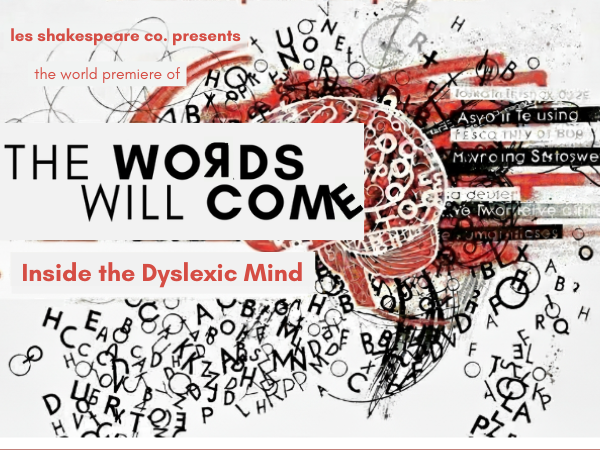
When I see friends’ shows with the intention to review, I try to go in as objectively as possible. I will preface this review by saying I’ve read a previous draft of The Words Will Come created by Melody Erfani; what I saw on Saturday, June 6th in Portland proved how much it takes a team like the one Erfani pulled together to create a brilliant show full of heart and intention.

Photo by Kyra Sanford
The Words Will Come blends movement in a dreamscape depicting dyslexia, identity, and searching for one’s voice and belonging. It was inspired in part by Erfani’s own experience with dyslexia as a child, as well as witnessing her niece’s decades later. Erfani was particularly struck by how little structures and institutions have changed in their approach to dyslexic and neurodivergent students. Prior to its world premiere at Shaking the Tree Theatre, Erfani developed the piece at HB Studio in 2024 and the Alembic Residency earlier this year with a slew of collaborators.
Immediately upon entering the space, the audience is encouraged to engage with the lobby display about a word that comes to mind about ourselves. There is also a plethora of local and state-wide resources available and some cool swag. I enjoyed being able to be creative and engage in some preshow reflection about dyslexia. It coalesced into a collaborative lobby piece where your word joined others’ to create a new piece of art.

Photo by Kyra Sanford.
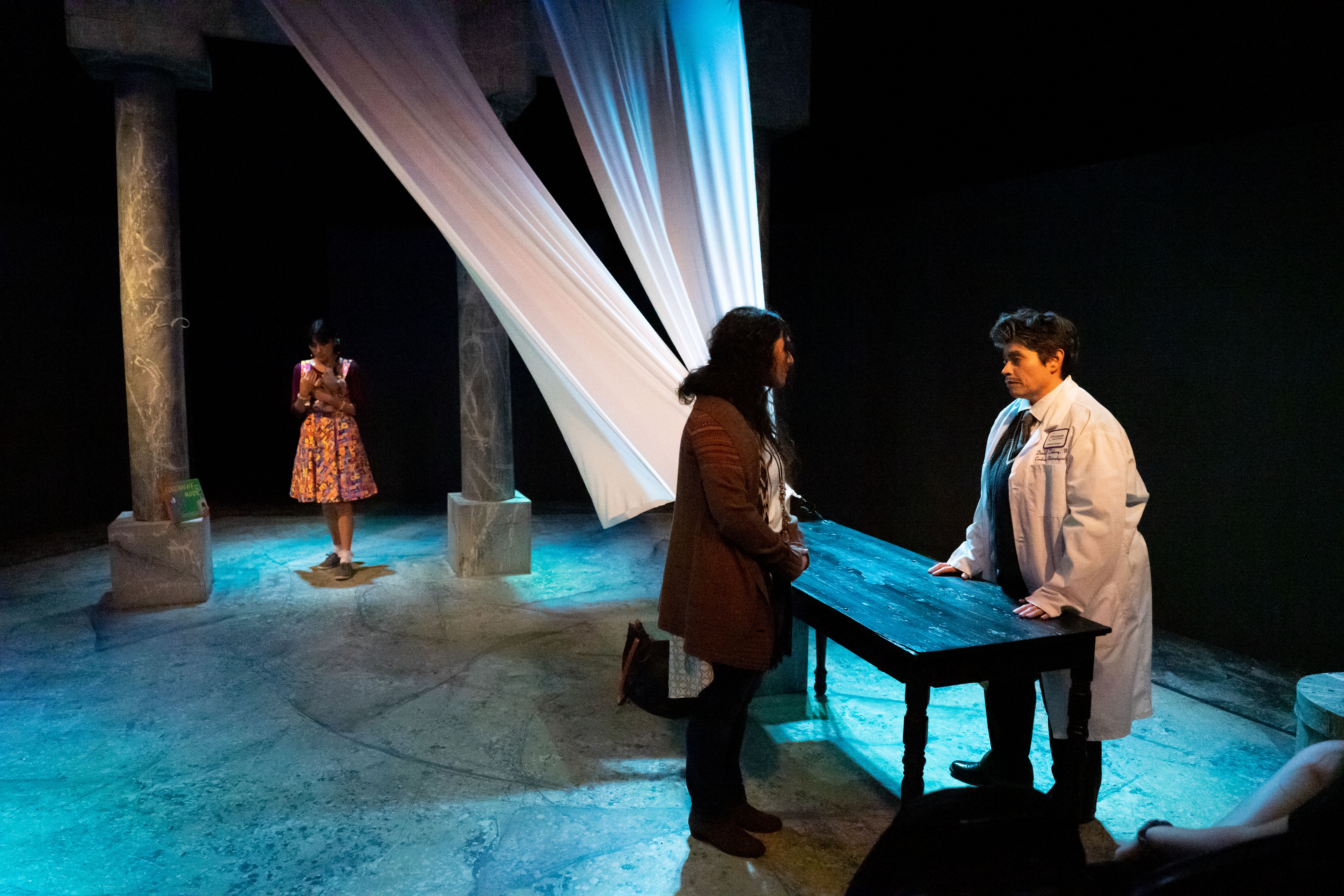
Erfani’s directing shines once again with a clear vision of storytelling in such a movement-driven piece and in a piece that exists in a more corporeal setting than reality. The set design by Kyra Sanford is sleek and simple, there to accentuate the actors’ interactions and movement and put them on display as if a museum exhibit. Three white columns stand center stage with curtains that are utilized throughout the show to create different scenes, to entrap actors and embody their inner worlds, and to project letters and words onto. Rachel Kinsman Steck’s lighting design and Alan Cline’s projections move seamlessly across the walls of the blackbox and Sanford’s scenery, creating a suffocating feeling that proved most effective when Sheila (our young protagonist played by Alex Abdelwahed) struggles with her dyslexia.

Photo by Kyra Sanford.
Abdelwahed’s Sheila is endearing, earnest, and fully grounded. She is the life and soul of the piece, bringing together Lala (her older counterpart played by Kelly Saunders) and the one and only Albert Einstein (played by Amy Driesler). Saunders expertly captures the darkness that surrounds an adult losing control of her life as she faces a potential divorce from her wife and as she must relive her childhood memories dealing with dyslexia. Also, major props to Saunders for doing at least three different accents while embodying different characters in Sheila’s world. Driesler’s Einstein surprised me, portraying Einstein not just as the genius we think he was but also embodying him as a full person with a variety of ideas, faults, and emotions. I was really tickled by Einstein playing one of Sheila’s classmates and also Einstein’s soap opera marriage directed by Sheila herself. The three actors work together in the movement portions of the play to create moments of frustration, confusion, fear, love, and acceptance.

Photo by Kyra Sanford.
I also really enjoyed the moments with Sheila and her mother (also played by Saunders), where their Iranian heritage was subtly present and wholly unapologetic. The “happy birthday” song, followed by Sheila’s unsuccessful wish to know how to read Good Night, Moon and her mother comforting her brought tears to my eyes. In addition, Lala’s casual queerness and her vulnerability around her unraveling relationship with her wife was touching and felt real and organic. As a neurodivergent person, this show made me feel seen. I absolutely adored The Words Will Come and would whole-heartedly see it again. This is what it means to make space for everyone in theatre and storytelling.

Photo by Kyra Sanford.
Performance Details
THE WORDS WILL COME: Inside the Dyslexic Mind
Created and directed by Melody Erfani
When: now through June 28, 2026
Thursdays–Saturdays at 7:30 PM
Sundays at 2:00 PM
*On Saturday, June 20, the show is bringing together educators, dyslexia advocates, immigrant and refugee support organizations, and community leaders for a post-show conversation about belonging, stigma, support systems, and what it means to feel seen. Featuring representatives from: International Dyslexia Association – Oregon, Pacific Refugee Support Group, Wise Choice Educational Solutions, Park Academy, and independent educational advocates
Where: Shaking the Tree Theatre, 823 SE Grant St. Portland, OR 97214
Run Time: Approximately 90 minutes
Tickets: $30 with limited Pay-What-You-Can tickets available
Tickets available at: www.lesshakespeareco.org

Alyssa Cokinis is a writer and theatre artist from Iowa, currently living in the Pacific Northwest. She is also the founder and editor of some scripts, which just published its sixth issue, available to purchase and read here.