Tag: dyslexia

  • Interview with the Designers of The Words Will Come

    Interview with the Designers of The Words Will Come

    by Alyssa Cokinis

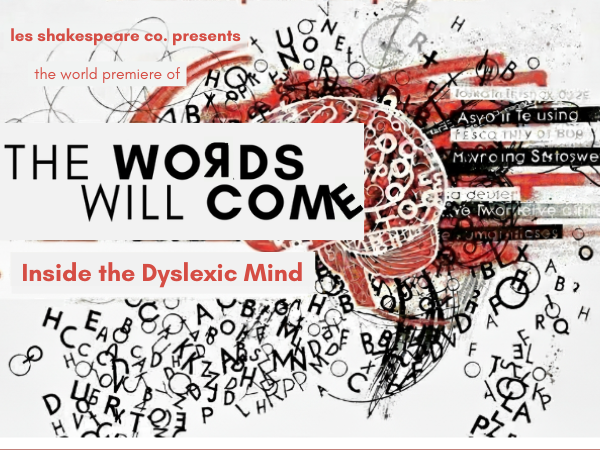
    What does a dyslexic mind look like? In Melody Erfani’s The Words Will Come, you see it come to life onstage. 

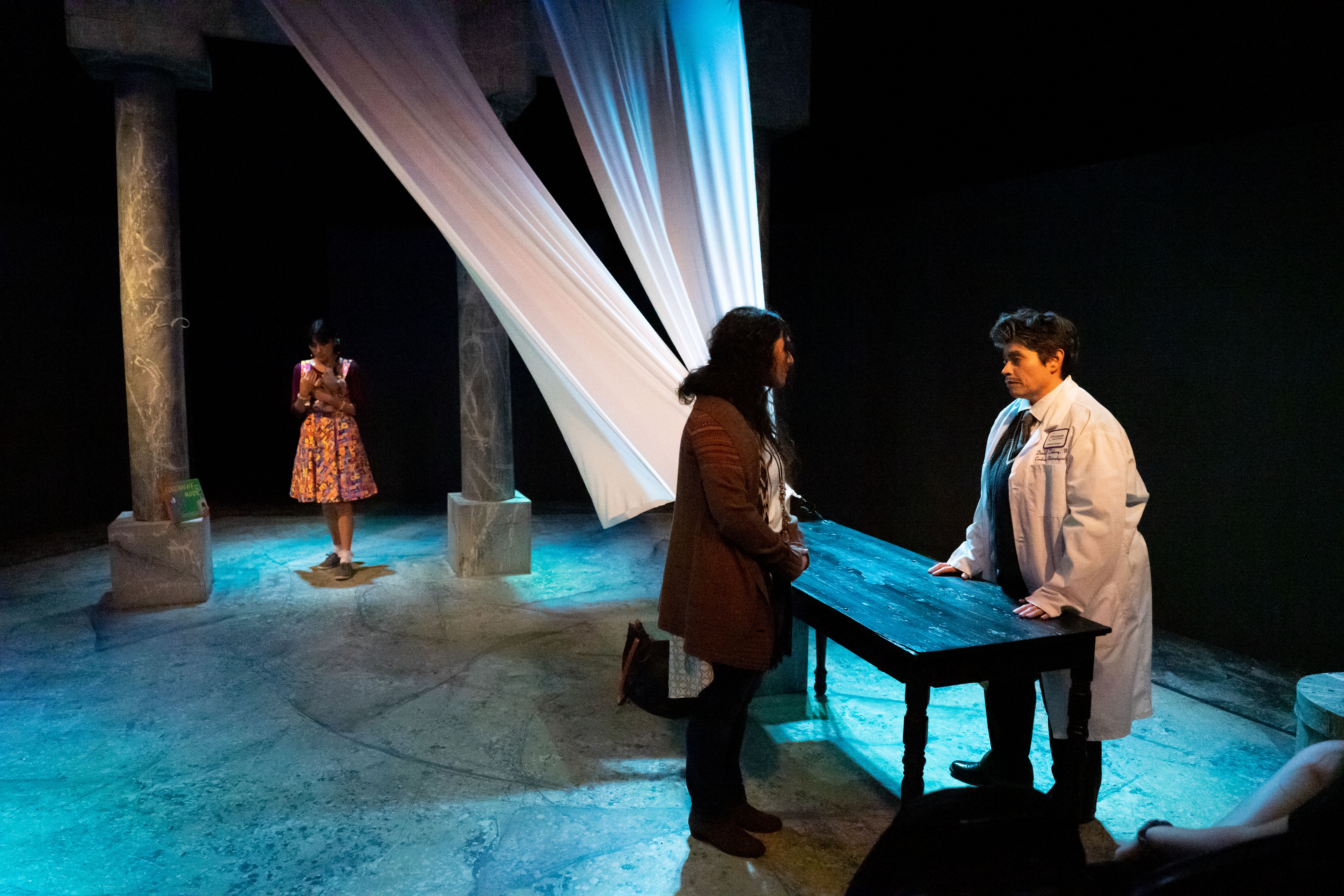
    Movement, lighting, costumes, and scenic design bring audiences up close to Sheila, a young Iranian-American girl struggling to belong in a school system that doesn’t support her. With the help of other characters, including the one and only Albert Einstein, Sheila navigates her mind and discovers that her neurodivergence is her strength, not her detriment. 

    I got to speak with some of the designers for the show about what drew them to the project, how their designs work in conversation with the script, and what they hope audiences leave with at the end of the show. 


    Cerra Cardwell (Lala), Sivan Raz (Sheila), and Getchie Argetsinger (Einstein) (left to right) in The Words Will Come. Photo by Edison Koo.

    Cokinis: What drew each of you to The Words Will Come and this collaboration? 

    Rachel Kinsman Steck (Lighting Designer): I have had the opportunity to work with Melody in the past, and they have been some of my favorite collaborations and theatrical projects. After reading the script, I was even more excited to be a part of this project because the story speaks about transformation, creativity, and courage. 

    Kyra Sanford (Set Designer): I’ve worked with Melody in the past and have really enjoyed our collaborative process. I liked the concept of the piece and the storytelling style.

    Kasee Arnett (Costume Designer): When Melody reached out, it felt like a breath of fresh air. We are hearing more and more about neurodiversities, and some people think it’s a new thing that’s been made up or is just now being discovered, when in reality it’s always been around. As a neurodivergent person, I connected with the play deeper than expected.

    Cokinis: How would you each describe the world of the play through your artistic lens?

    Rachel Kinsman Steck (Lighting Designer): For me, it is a collage of time, place, and space that acts as waves of energy and exploration.

    Kyra Sanford (Set Designer): This piece exists both in a very real present, in the world of memory, and the world of imagination.

    Kasee Arnett (Costume Designer): I would describe it as refreshing, important, intriguing, and relatable. When you step into this world you are able to experience firsthand the challenges and occurrences one may encounter with dyslexia but in an artistic way. 

    Cokinis: Kyra, how did you approach creating a physical world for a play rooted in memory and perception?

    HB Residency Workshop Set Design Kyle Artone & Kim Kim, Light Design Ben Wolfe, Projection Design Seth Tyler Black. Photo by Edison Koo.

    Kyra Sanford (Set Designer): I used a lot of images of museums and their architecture, and on a more metaphorical level, I looked at the basic shapes that make up letters and writing. The set is anchored by a unit of grand columns with plain curtains hanging between them. Throughout the scenic shifts, the fabric is pulled into different configurations and the pedestals and furniture are rearranged. This is all accomplished by the actors as part of the storytelling: when memories start to shift us into a new location, the set is physically pulled into a new shape, more so trying to create the feeling of being in a certain space. These shifts are enhanced by projections and lighting, using the fabric as a canvas for another layer of storytelling.

    Cokinis: Rachel and Kasee, how does lighting and costume design help communicate emotional or cognitive shifts in the play, as well as support themes and characterization of identity and memory? Mindy, how did you begin developing a movement vocabulary for the piece?

    Rachel Kinsman Steck (Lighting Designer): Lighting is literally energy, and I try to facilitate the energy to sculpt the performers, the space, and the action. The design hopes to embody the conscious and unconscious shifts of character and space.

    Kasee Arnett (Costume Designer): The moment a character is on the stage in costume, they are portray how they view the world and function in it. Lala appears in a flowing Boho type outfit that is a lot duller, portraying her contradicting flexibility as an artist with challenges navigating life, stressors, and accepting who she is. Sheila is Lala’s younger self whom comes from the 90s era. Due to her childlike nature, Sheila is dressed in a vibrant, and fun outfit. I wanted Einstein to be somewhere in the middle of Sheila and Lala, since he is something that they share. 

    Sivan Raz (Sheila), Getchie Argetsinger (Einstein), and Cerra Cardwell (Lala) (left to right) in The Words Will Come. Photo by Edison Koo.

    Mindy Mawhirter (Assistant Director): The movement for this piece was developed very collaboratively. Not only does it highlight the abilities of the actors, but it’s rooted heavily in the character work each actor brought to the room.

    Cokinis: Mindy, what kinds of experiences or emotions are expressed physically rather than verbally in the play?

    Mindy Mawhirter (Assistant Director): Movement is utilized most in this play when the characters are experiencing extreme levels of frustration. Because frustration–especially when that frustration is pointed at one’s self–is so internal, movement allows the audience to see a physical expression of that anger. The language of the play gives us such a beautiful description of how the mess of words in Sheila’s head builds over time until it’s indecipherable. Through movement we get to see that internal struggle build. 

    Cerra Cardwell (Lala), Sivan Raz (Sheila), and Getchie Argetsinger (Einstein) (left to right) in The Words Will Come. Photo by Edison Koo.

    Cokinis: What details might audiences not consciously notice, but that contribute to the storytelling?

    Rachel Kinsman Steck (Lighting Design): I am always excited about transitions and supporting them. To me, transitions are like motifs within melodies and exciting to explore.

    Kasee Arnett (Costume Design): The subtle choices that I’ve made for these characters–color scheme, texture, silhouette, and overall the appearance–were chosen to show why these characters wear what they do and how it helps guide the story. For example, dyslexia affects how the brain processes language. I represented that by using a patterned fabric for Sheila‘s overall dress, which is made up of contorted and deformed letters in this bright and fun pattern being abstractly hidden in plain sight.

    Cokinis: What has surprised, challenged, or inspired you most during the creative process? 

    Rachel Kinsman Steck (Lighting Designer): I have really enjoyed new collaborations with Alan Cline (Projection Designer) and Kyra (Set Designer). Thinking about limitations as resources, we’ve had to have strong communication and willingness to remain flexible. We are supporting each other in the raising up of this project.

    Kyra Sanford (Set Designer): I think the biggest thing would be the creative solutions we have come up with for projection surfaces and how they are able to shift to create different locations.

    Kasee Arnett (Costume Designer): As a neurodivergent person, I really connected with the classroom scene. Even though I do not personally experience dyslexia, my personal challenges during my schooling have always felt isolating and challenging in ways that the people around me could not understand. Therefore, when reading that scene, I felt myself getting emotional due to seeing such a familiar experience. I felt seen and understood. 

    Sivan Raz (Sheila) and Getchie Argetsinger (Einstein) (left to right)  in The Words Will Come. Photo by Edison Koo.

    Cokinis: What do you hope audiences feel or experience through your work in the production? 

    Rachel Kinsman Steck (Lighting Designer): Lighting’s use of color is a great way to shape memory, confusion, and clarity. Our eyes, minds, and bodies respond consciously and unconsciously to color which have deep cultural connections. I hope the lighting design embodies the audience as they take this marvelous journey.

    Kyra Sanford (Set Designer): I hope to help to create a world that both gives audiences enough clues to tell the story but stays out of the way enough to let the words and actions be the primary focus.

    Kasee Arnett (Costume Designer): If they are a Neurodiverse person, I hope they leave the show knowing that they are accepted and loved regardless of how people have made them feel prior in life, and if they’re a non-neurodiverse person I hope this expands their view on people and brings awareness to the silent challenges someone of any age can face.

    Performance Details

    THE WORDS WILL COME: Inside the Dyslexic Mind
    Created and directed by Melody Erfani

    When: June 4–28, 2026
    Thursdays–Saturdays at 7:30 PM
    Sundays at 2:00 PM

    Where: Shaking the Tree Theatre
    823 SE Grant St
    Portland, OR 97214

    Run Time: Approximately 90 minutes

    Tickets: $30 with limited Pay-What-You-Can tickets available
    Tickets available at: www.lesshakespeareco.org


    Alyssa Cokinis is a writer and theatre artist from Iowa, currently living in the Pacific Northwest. She is also the founder and editor of some scripts, which just published its sixth issue!

  • Interview with Creator Melody Erfani on The Words Will Come

    Interview with Creator Melody Erfani on The Words Will Come

    By Alyssa Cokinis

    What if dyslexia were seen as creativity and not as a deficit? 

    The Words Will Come: Inside the Dyslexic Mind by Melody Erfani explores just that. This movement-driven piece follows Sheila, a young Iranian-American girl with dyslexia struggling in school. Movement, sound, projection, and language fracture onstage, translating Sheila’s mind for the audience in an immersive multisensory experience. Within the confines of her mind, Sheila finds an ally in fellow dyslexic Albert Einstein, and she starts to see her dyslexia as something creative and different that brings color to her life and learning. 

    I spoke with Erfani about how the piece was devised, her process, and her hope for audiences once they see the show. 

    Sivan Raz (Sheila) in The Words Will Come by Melody Erfani. Photo by Edison Koo.

    Alyssa Cokinis: How did the concept and themes for The Words Will Come emerge? 

    Melody Erfani: During COVID, I became curious about how my dyslexia affects my day-to-day life as an adult. Other than getting lost very easily, I don’t think about it much now the way I did when I was a kid. I read a book called The Dyslexic Advantage by Brock L. Eide and Fernette F. Eide, which explores the ways dyslexia allows people to see the world differently. I began to recognize how those strengths show up in my theatre work in how I think spatially, visually, and emotionally.

    Shortly after that, my niece Ella, who was eight at the time, began struggling in school. I was struck by how many of the same challenges still exist and how little has changed in 30+ years. It reminded me of a specific childhood memory, sitting in an English lesson on tenses or prepositions that made absolutely no sense to me. I remember looking over at another student’s paper because everyone else seemed to understand, and I didn’t. It felt like the teacher was speaking a completely different language, and I was on the outside looking in.

    That feeling of confusion, isolation, and trying to make sense of something that isn’t built for you became a central emotional thread in the piece. I wanted to provoke conversation about our learning systems, offer a sense of hope, and illuminate the richness and complexity of the neurodivergent experience.

    Cerra Cardwell (Lala), Sivan Raz (Sheila), and Getchie Argetsinger (Einstein) (left to right) in The Words Will Come. Photo by Edison Koo.

    Cokinis: This is the world premiere of the play after two development residencies (congrats!!). How has each residency shaped the trajectory of the piece?

    Melody Erfani: The piece began with an idea and a lot of research, but I initially felt stuck. I ended up creating my own mini writing residency, working with Jonathan Cullen, Rebby Foster, and Cynthia Petts. We met once a week over six weeks, and that process helped me through brainstorming, improvisations, and informal readings of the piece. 

    Those few scenes of material became the foundation for the HB Studio Residency in February 2024. That phase was a staged workshop where a rough draft of the script was developed further, collaborating with designers to add layers to the experience. We had four free public performances followed by talkbacks. Hearing directly from audiences helped me identify what was resonating and what needed to be reworked.

    Most recently, I was in the Alembic Residency, which focused more on allowing rehearsal space for exploration of physical movement. That was instrumental, especially since movement plays such a key role in the piece. Working with other artists and receiving feedback on the physical storytelling has helped clarify the narrative in a much more embodied way.

    Cerra Cardwell (Lala), Sivan Raz (Sheila), and Getchie Argetsinger (Einstein) (left to right) in The Words Will Come. Photo by Edison Koo.

    Cokinis: How does movement drive the story of your play and the relationships between characters, as well as their relationship to dyslexia? 

    Melody Erfani: Movement is used to express shifts in time, confusion, distortion, and moments of overwhelm or chaos. It allows us to move beyond literal storytelling and into a more experiential space. Rather than explaining what’s happening inside the main character’s mind, movement gives the audience a way to feel it alongside her. It creates a shared sensory experience, one that mirrors the nonlinear, sometimes disorienting, but also imaginative and expansive nature of dyslexia.

    Theatre, for me, is the right medium for that because it’s inherently collaborative and immediate. The audience is right there, breathing the same air as the actors. There’s something about that shared space – the vibrations, the breath that creates an experience you can’t replicate elsewhere. It allows the audience not just to observe, but to physically and emotionally enter the world of the play.

    Sivan Raz (Sheila) and Getchie Argetsinger (Einstein) (left to right)  in The Words Will Come.
    Photo by Edison Koo.

    Cokinis: What are you most excited about with this next iteration of The Words Will Come

    Melody Erfani: From the beginning, the design elements have always been an essential layer of the piece. Even while writing, I was imagining how projection, sound, and movement would interact with the story. While our budget is modest (and there are always limitations that come with that), the design team we’ve assembled is incredibly creative and thoughtful. I’m excited to see how their artistry deepens the world of the play and transforms it into a more immersive, multi-sensory experience.

    Cokinis: What do you hope audiences walk away thinking or feeling?  

    Melody Erfani: Empathy. Children between the ages of 7–12 often struggle the most with dyslexia. Our education system is so heavily rooted in reading that if a child struggles to read, it impacts every subject. One challenge compounds another, and many kids end up feeling left behind. There are sobering statistics around students not graduating and the school-to-prison pipeline, where a significant portion of the incarcerated population have learning differences.

    Sivan Raz (Sheila) and Getchie Argetsinger (Einstein) (left to right)  in The Words Will Come.
    Photo by Edison Koo.

    At the core of it, I want audiences to leave asking: how can we better see, support, and advocate for these kids? And how can we begin to shift the narrative from deficit to difference?

    There’s also a thread of hope in the piece, embodied in the character of Einstein. He represents possibility. He’s someone widely recognized as a genius, and he was dyslexic. Even as a child, knowing that gave me a sense of hope that there was another way to think, another way to be, and that difference could be a strength.

    Performance Details

    THE WORDS WILL COME: Inside the Dyslexic Mind
    Created and directed by Melody Erfani

    When: June 4–28, 2026
    Thursdays–Saturdays at 7:30 PM
    Sundays at 2:00 PM

    Where: Shaking the Tree Theatre
    823 SE Grant St
    Portland, OR 97214

    Run Time: Approximately 90 minutes

    Tickets: $30 with limited Pay-What-You-Can tickets available

    Tickets available at: www.lesshakespeareco.org


    Alyssa Cokinis is a writer and theatre artist from Iowa, currently living in the Pacific Northwest. She is also the founder and editor of some scripts, which just published its sixth issue!